Booking choice: The Poljud stadium tour, from $13 per person. Check dates Tour details
Croatians call it the Poljud Beauty, Poljudska ljepotica. The official name is plainer: Gradski stadion u Poljudu, the City Stadium in Poljud. The City of Split owns it, maintains the roof and concrete, and Hajduk runs it as the main tenant.
Below are the capacity figures and where each comes from, the record crowds, the architecture, the nights that made history and the 2026 argument about its future.
The quick answer
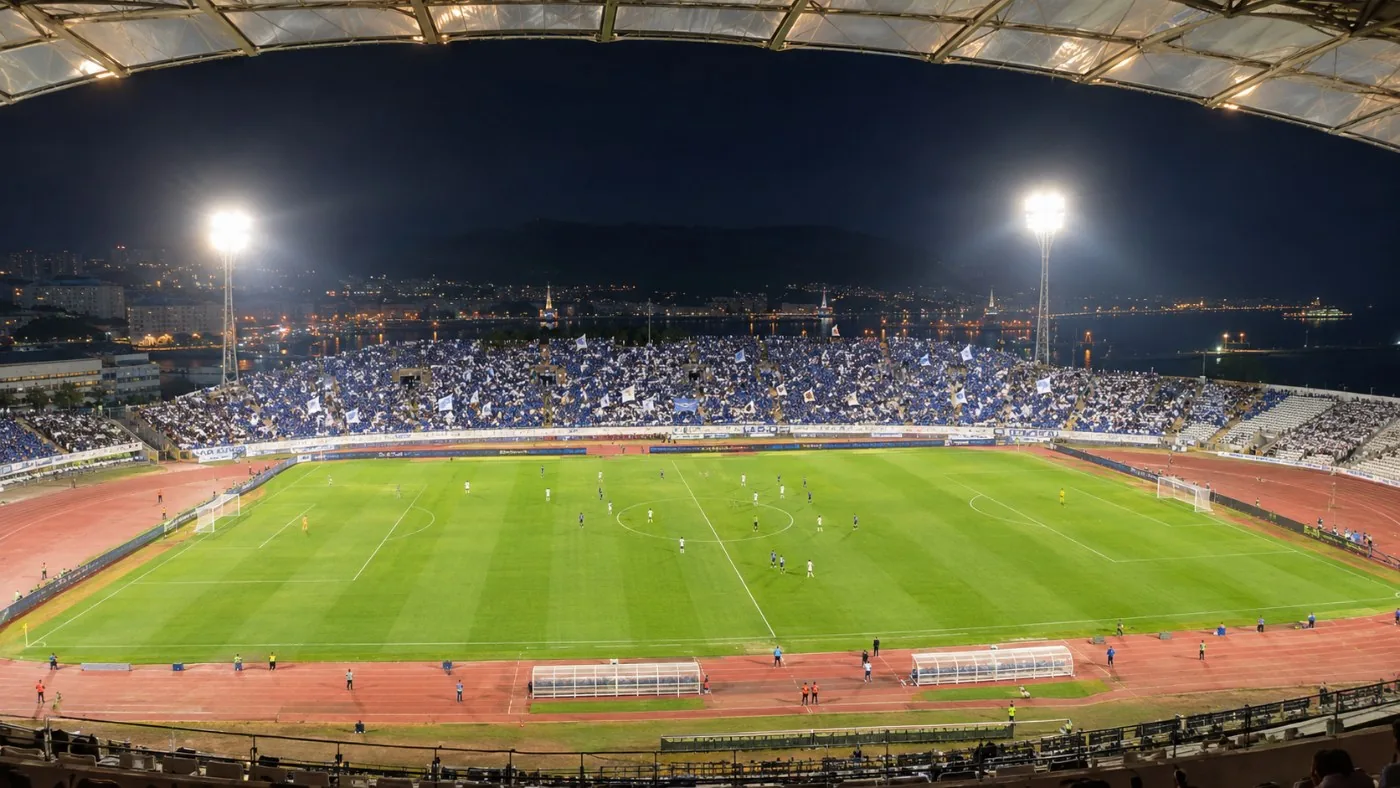
Poljud seats 33,987 by Hajduk's official figure; other sources print 34,198, 34,448 or a rounded 35,000. It opened on 12 September 1979 for the Mediterranean Games, designed by Boris Magaš with a shell-shaped roof over the east and west stands. The biggest crowd was the 1982 derby with Dinamo, put at 62,000 to 65,000 before it became all-seater. It is a protected Croatian monument since 2015, not a UNESCO site.
What is the capacity of Poljud Stadium?
33,987 seats, the figure Hajduk gives on its official stadium page. You will see other numbers, and none of them is a mistake so much as a different count.
Where each figure comes from:
| Figure | Source | What it is |
|---|---|---|
| 33,987 | Hajduk Split | Official seated capacity today |
| 34,198 | N1 Croatia (2023) | Press figure |
| 34,448 | StadiumDB | Database figure |
| 35,000 | Travel guides | Rounded |
| 50,000 to 55,000 | Wikipedia, StadiumDB | Original 1979 capacity with standing room |
| About 62,000 | Wikipedia | 1980s peak with temporary extra space |
Use 33,987. It is the club's number and the one that decides how many tickets go on sale.
What is the record attendance at Poljud?
Around 62,000 for Hajduk v Dinamo on 28 February 1982, with capacity temporarily raised. Some sources say 65,000, and attendance figures for the 1980s vary widely.
- 1982 v Dinamo: 62,000 (Wikipedia) or 65,000 (StadiumDB).
- 1980 v Hamburg: 52,000, in the European Cup.
- 1993 Cup derby v Dinamo: 45,000, the top figure of the Croatian era.
- All-seater record: 38,000 v Dinamo on 22 February 2009.
- Recent: 32,212 v Dinamo on 20 September 2025. The 2024-25 season drew 396,498 to 18 home games, an average of 22,028 and the HNL's best since independence (Index.hr).
Why was Poljud Stadium built?
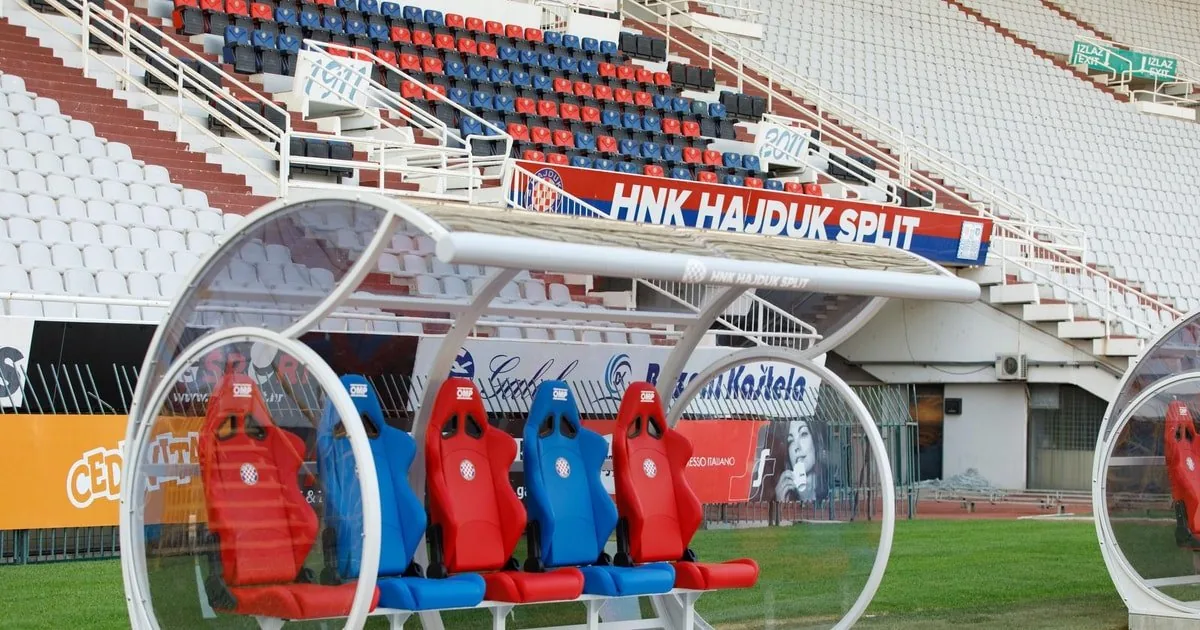
For the VIII Mediterranean Games in 1979. It was built from 1977 to 1979 and opened on 12 September 1979 as the main venue.
The Games ran from 15 to 29 September 1979 and were opened by Josip Broz Tito (1979 Mediterranean Games). Split got a stadium the size of a capital's. Hajduk moved in from its cramped old ground at Stari plac and has played here ever since.
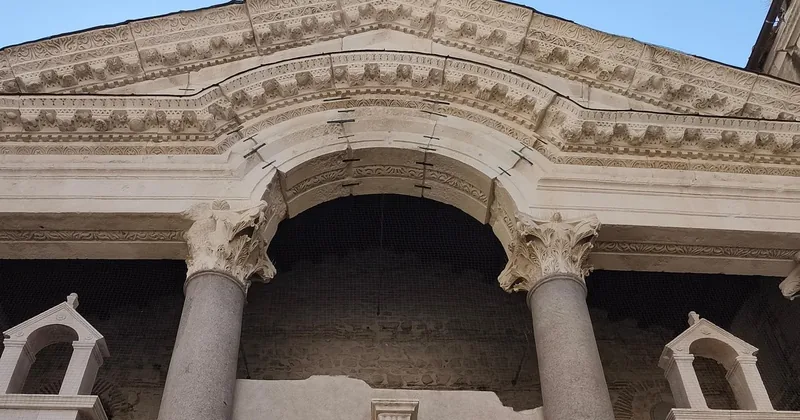
The same year, UNESCO listed Diocletian's Palace. Split gained two landmarks that year, built nearly 1,700 years apart.
Hear the 1979 story where it happened: the club's own guide, the trophy room and the pitch side.
Check dates for the Poljud stadium tourWho designed Poljud, and how does the shell roof work?
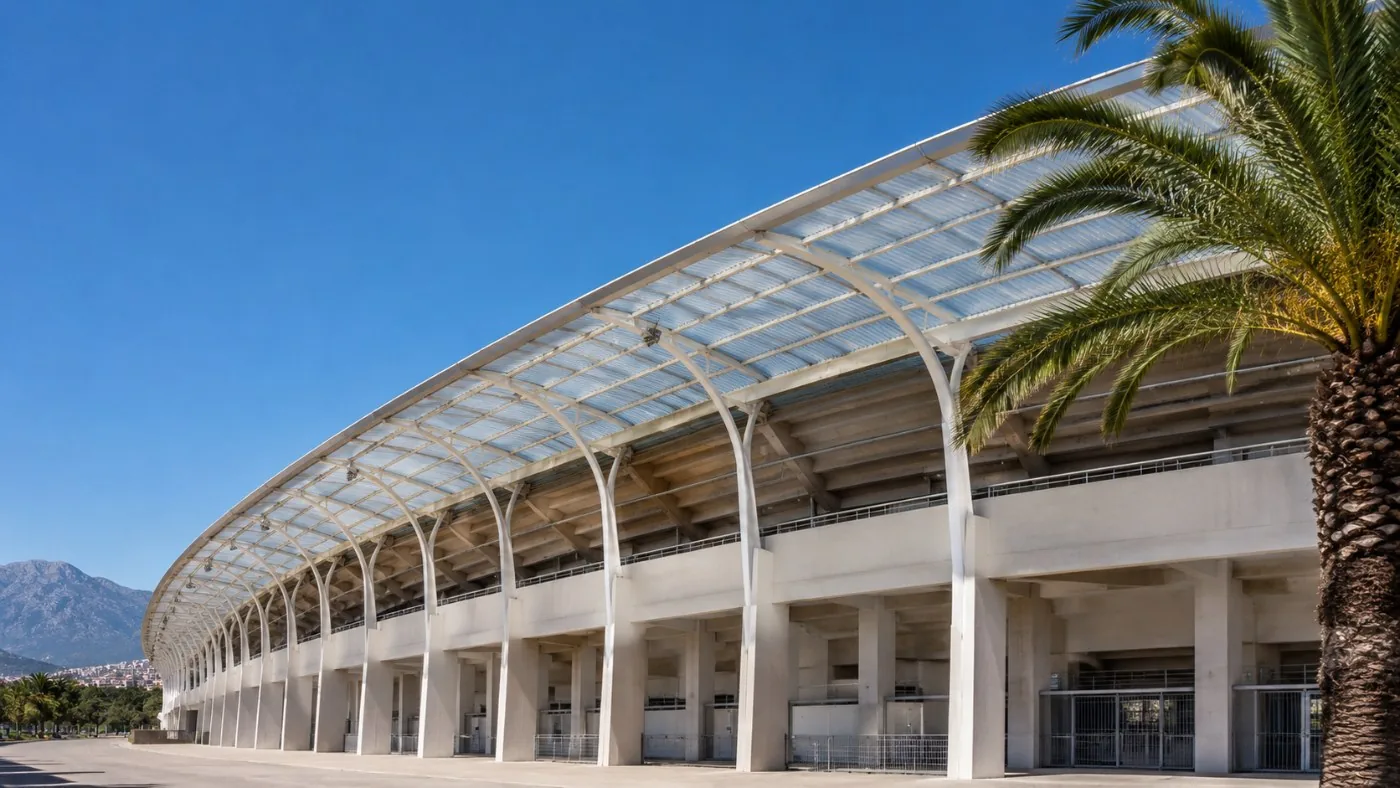
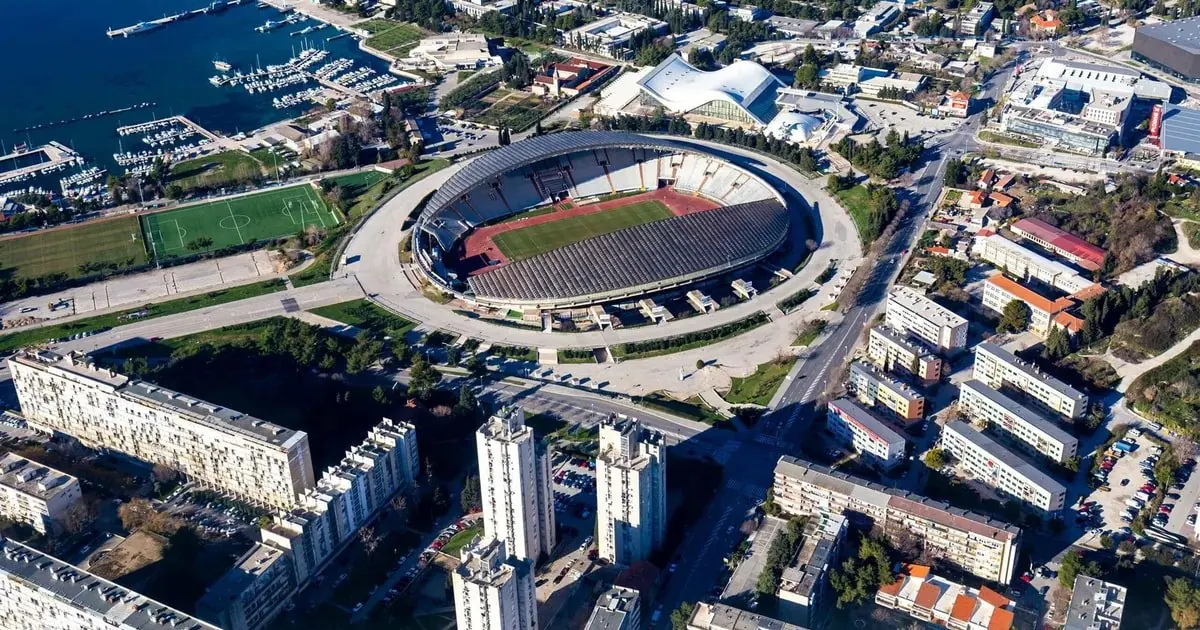
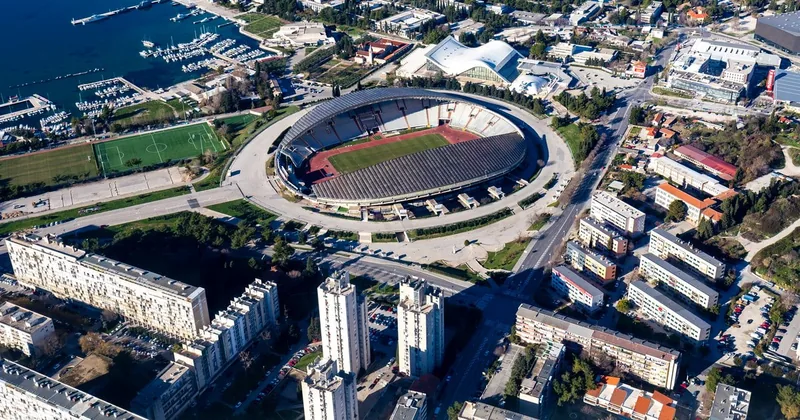
Architect Boris Magaš, with structural engineer Boženko Jelić. Two concrete-and-steel shells, about 206 by 47 metres each, cover the west and east stands.
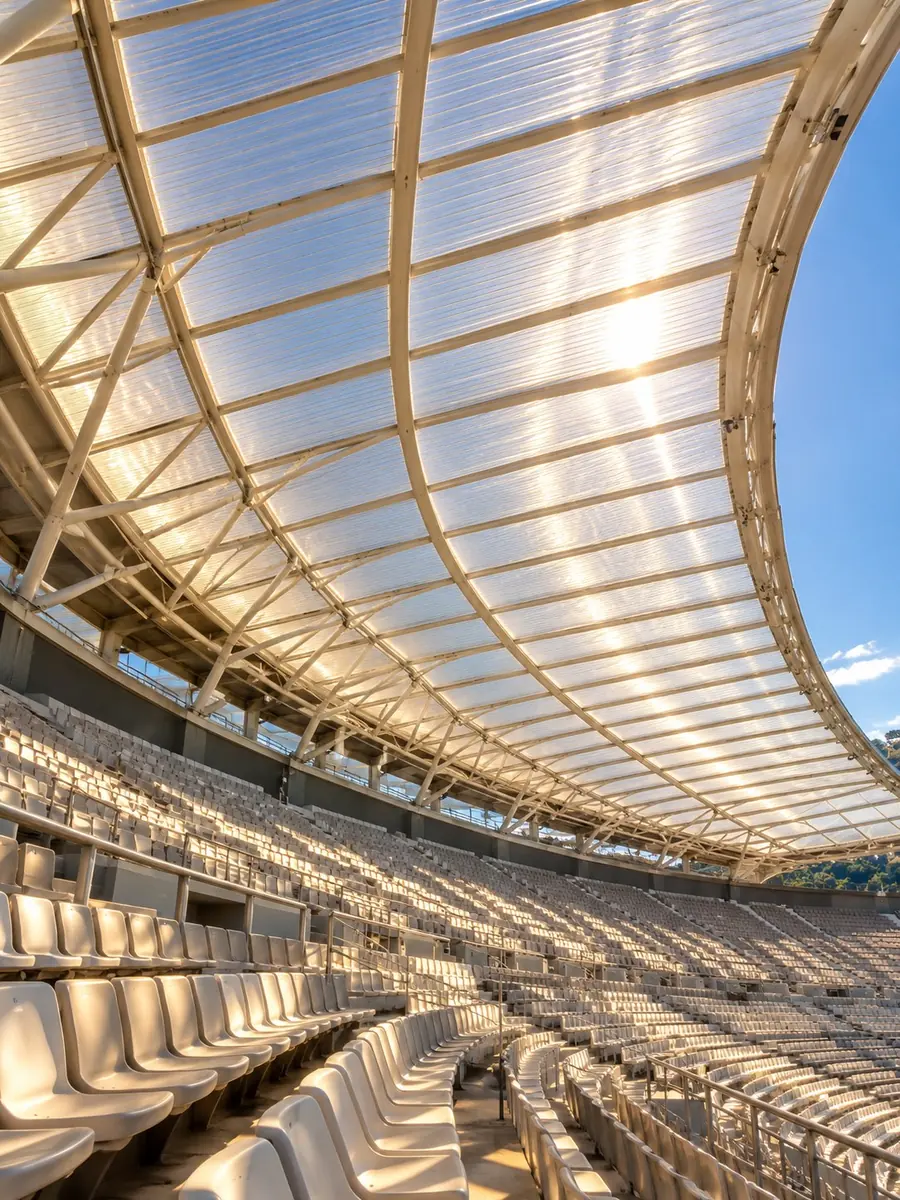
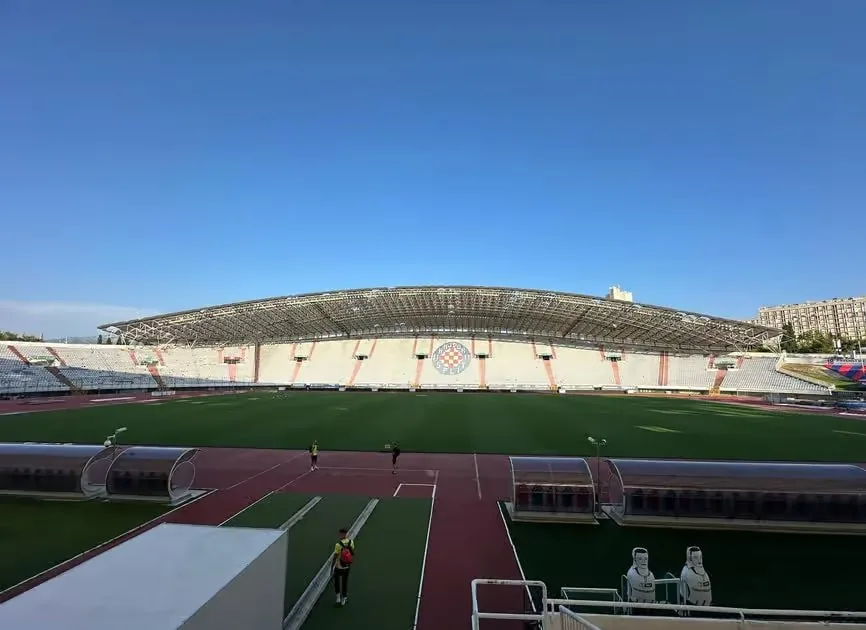
The idea is a seashell split in half. The bowl is reinforced concrete; the roof is a ribbed steel frame clad in translucent Lexan polycarbonate panels, so light falls through onto the seats. The south end stays open towards the sea. Nineteen cabins hang from the west roof, seven of them for TV, and 630 floodlights light the pitch (Hajduk, Wikipedia).
The roof is also the problem. A storm on 8 July 2025 tore panels loose and flooded the pitch, and experts at Split's civil-engineering faculty found fatigue in the steel.
What big events has Poljud hosted?
The 1979 Mediterranean Games, the 1990 European Athletics Championships, the 2010 IAAF Continental Cup, Croatia internationals and concerts for about 50,000.
- Athletics: the main stadium of the 1990 European Championships. A new track and VIP boxes went in for the 2010 Continental Cup.
- Croatia: 35,000 watched Croatia v Italy in 1995 and v Denmark in 1997; France came in the Nations League in March 2025.
- Concerts: Iron Maiden (2008), Roger Waters' The Wall and Thompson (2013), and big Croatian nights such as Noć svijeća (1993).
- Ultra Europe: the festival used Poljud from 2013 and drew about 160,000 over three days in 2015, then moved to Park mladeži in 2019.
- Hajduk's centenary: on 13 February 2011 the city celebrated 100 years, with Slavia Prague as guests. More in the birthday post.
What happened at Hajduk v Partizan in 1990?
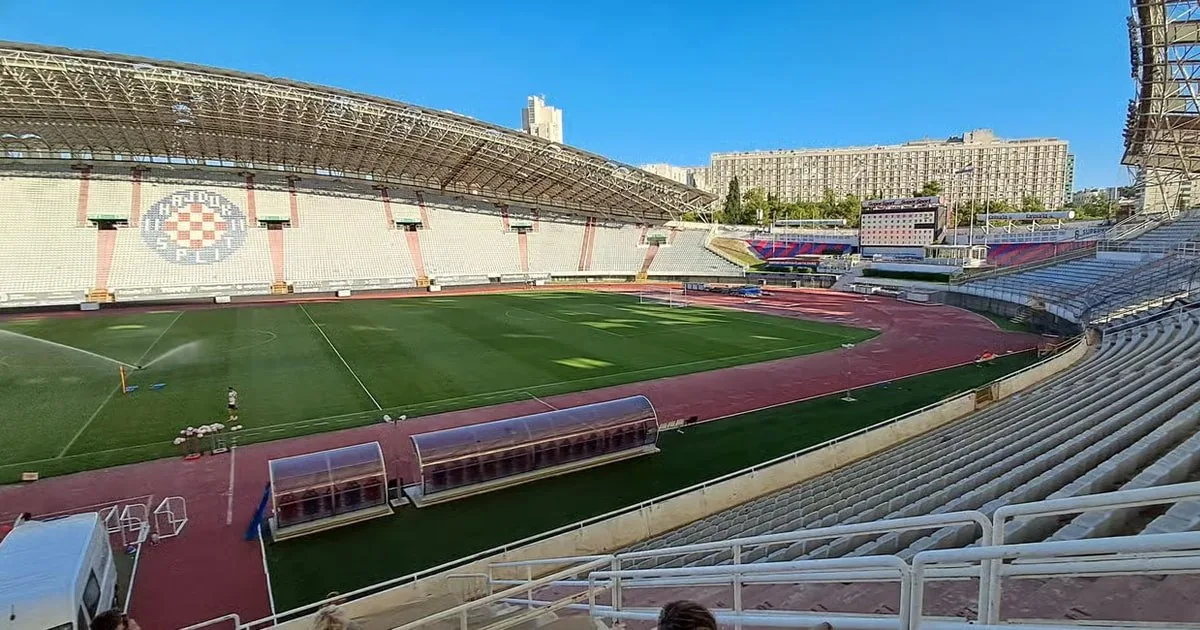
On 26 September 1990, with Partizan 2-0 up, Torcida fans stormed the pitch, pulled down the Yugoslav flag and burned it. The match was awarded 3-0 to Partizan.
It happened in the 73rd minute, a year before war broke out, and the picture of the burning flag became one of the symbols of Croatia breaking from Yugoslavia (Domovinski rat). Torcida itself dates from 28 October 1950 and is widely described as one of Europe's oldest organised supporters' groups.
The 20th-century side of Split, from the wartime bombings to Tito and the 1990s, is the subject of the 20th-century history walk, which covers Hajduk as a city symbol. It is brand new, with a single review so far.
Tito, the wars and Hajduk as a city symbol, with old photos on a tablet: an evening walk through 20th-century Split.
Explore the 20th-century history walk Tour detailsIs Poljud Stadium a UNESCO World Heritage Site?
No. Poljud is a protected Croatian cultural good, listed by the Ministry of Culture in November 2015 (register no. Z-6644). UNESCO lists Diocletian's Palace, not the stadium.
The mix-up is common enough that Split's former head conservator, Radoslav Bužančić, complained the debate runs as if UNESCO had protected it (tportal). National protection still matters: any demolition needs the Ministry of Culture to agree.
Will Poljud Stadium be demolished?
Not decided. A March 2026 city study recommends demolition and a new 35,000-seat stadium on the same site, but the Ministry of Culture has to rule first.
The study by UHY Savjetovanje put a repair at over 120 million euros and the full plan, including a rebuilt Brodarica ground for Hajduk from 2029 to 2032, at about 316 million (tportal). Hajduk and the Torcida want a new stadium. Croatian architects and Nenad Fabijanić, who holds Magaš's copyright, want the old one restored. Mayor Tomislav Šuta has postponed a referendum until the Ministry decides.
The latest is in the new-stadium plan post. For now the shell stands, and the tour still goes inside.
See Magaš's shell from the pitch side while the city argues about its future.
Check dates for the Poljud stadium tourFrequently asked questions
How many seats does Poljud Stadium have?
33,987, according to Hajduk Split. Other sources give 34,198, 34,448 or a rounded 35,000.
When was Poljud Stadium built?
From 1977 to 1979. It opened on 12 September 1979 for the Mediterranean Games.
Who was the architect of Poljud?
Boris Magaš, with structural engineer Boženko Jelić.
Is Poljud the biggest stadium in Croatia?
Yes, by usable seats: Maksimir in Zagreb has more seats on paper, but its east stand has been closed since the 2020 earthquake.
Ready to book
Choose your tour
Free cancellation up to 24 hours before on every option. Prices are from-prices in USD and move with the season.

Poljud Stadium Tour with Trophy Room
- Live guide in English, Italian or Croatian
- Trophy room with over 1,500 items
- Press room and VIP lounge, with photos
Old Town Bike Tour with Poljud Stadium
- Bike, helmet and a licensed guide
- Guided Poljud stadium tour, ticket included
- Sustipan park and the Marjan forest
Diocletian's Palace & 20th-Century History Walk
Tito, the wars and Hajduk as a city symbol