Booking choice: The Poljud stadium tour, from $13 per person. Check dates Tour details
Croatia has two big stadiums and then a long drop. Poljud in Split and Maksimir in Zagreb are the only grounds over 20,000, and both are at the centre of plans for a new stadium.
Below: the head-to-head, a table of the largest grounds with a source for every number, and short answers to the side questions people ask next.
The quick answer
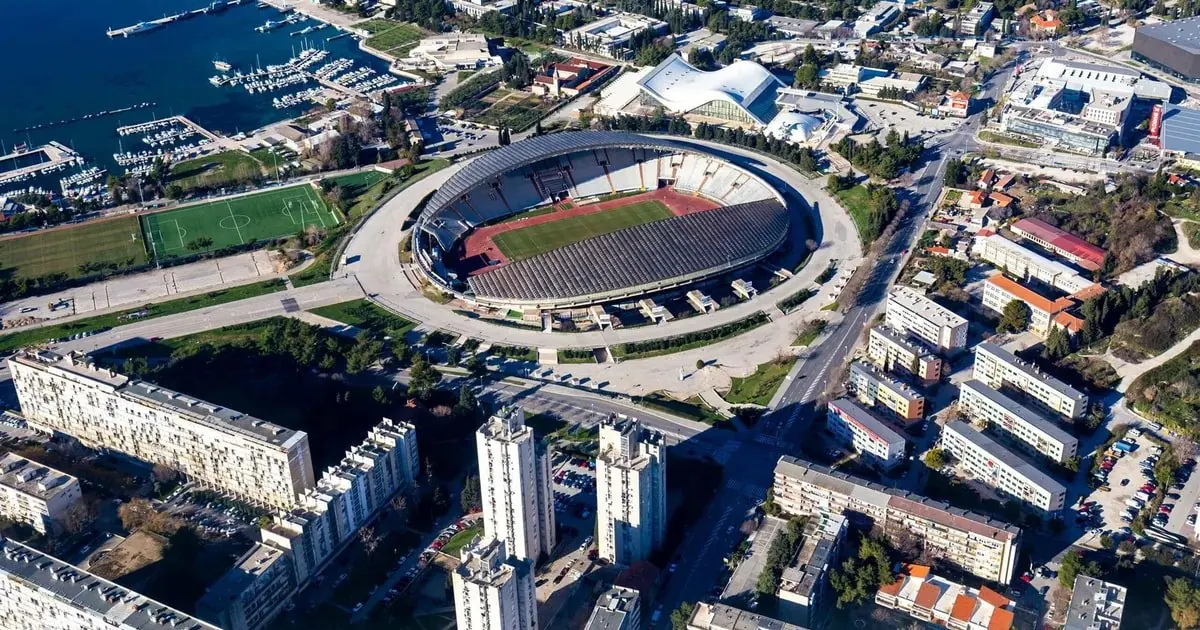
Poljud in Split is Croatia's largest usable stadium, with 33,987 seats. Maksimir in Zagreb has 35,423 seats on paper, but its east stand has been closed since the March 2020 earthquake, leaving about 25,912. Next come Osijek's old Gradski vrt and the new Opus Arena, 13,005 seats. A new 35,000-seat Maksimir is planned for late 2028 or 2029.
What is the biggest stadium in Croatia?
Poljud in Split, with 33,987 seats. Maksimir in Zagreb is bigger on paper, but a quarter of it has been closed since 2020.
Hajduk's official figure is 33,987. Maksimir's nominal capacity is 35,423, but the east stand's 9,514 seats have been out of use since the Zagreb earthquake of March 2020 (Stadion Maksimir). The fair wording: Poljud is Croatia's largest usable stadium today.
Poljud or Maksimir: which is bigger?
Maksimir on paper, Poljud in practice. Here is how they compare.
| Poljud, Split | Maksimir, Zagreb | |
|---|---|---|
| Home club | Hajduk Split | Dinamo Zagreb |
| Seats | 33,987 (official) | 35,423 nominal, about 25,912 usable |
| Opened | 1979 | 1912, rebuilt many times |
| Record crowd | About 62,000 (1982, some say 65,000) | 64,138 (1973) |
| Status | Protected monument since 2015; future debated | To be demolished for a new stadium |
| Planned replacement | 35,000 seats (city study, not decided) | 35,000 seats, late 2028 or 2029 |
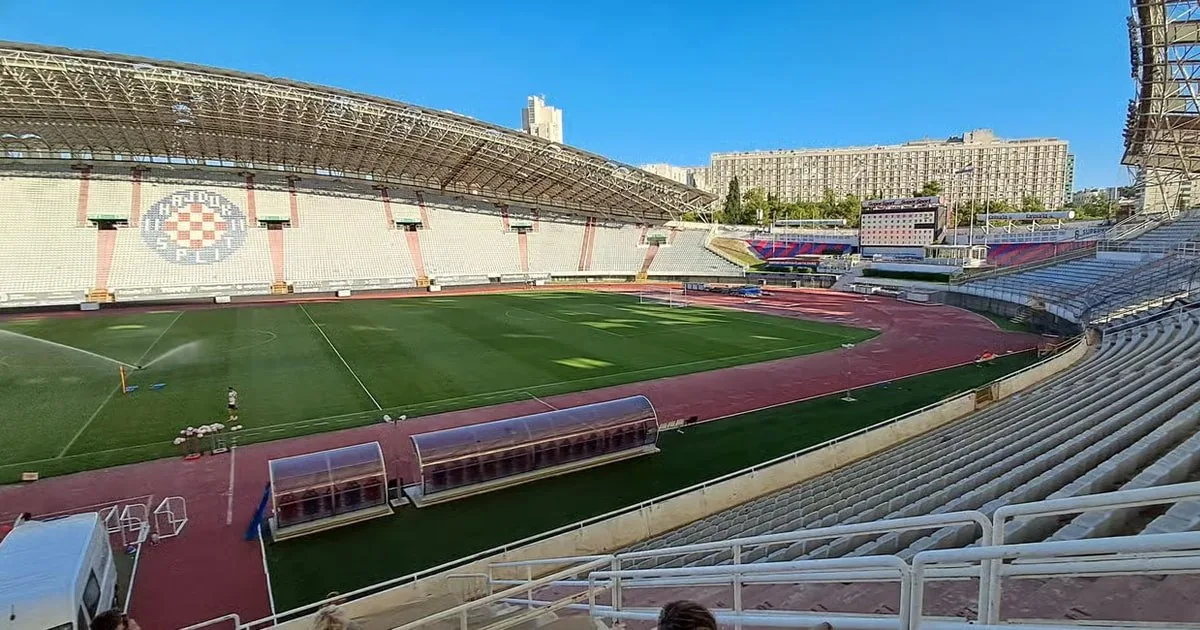
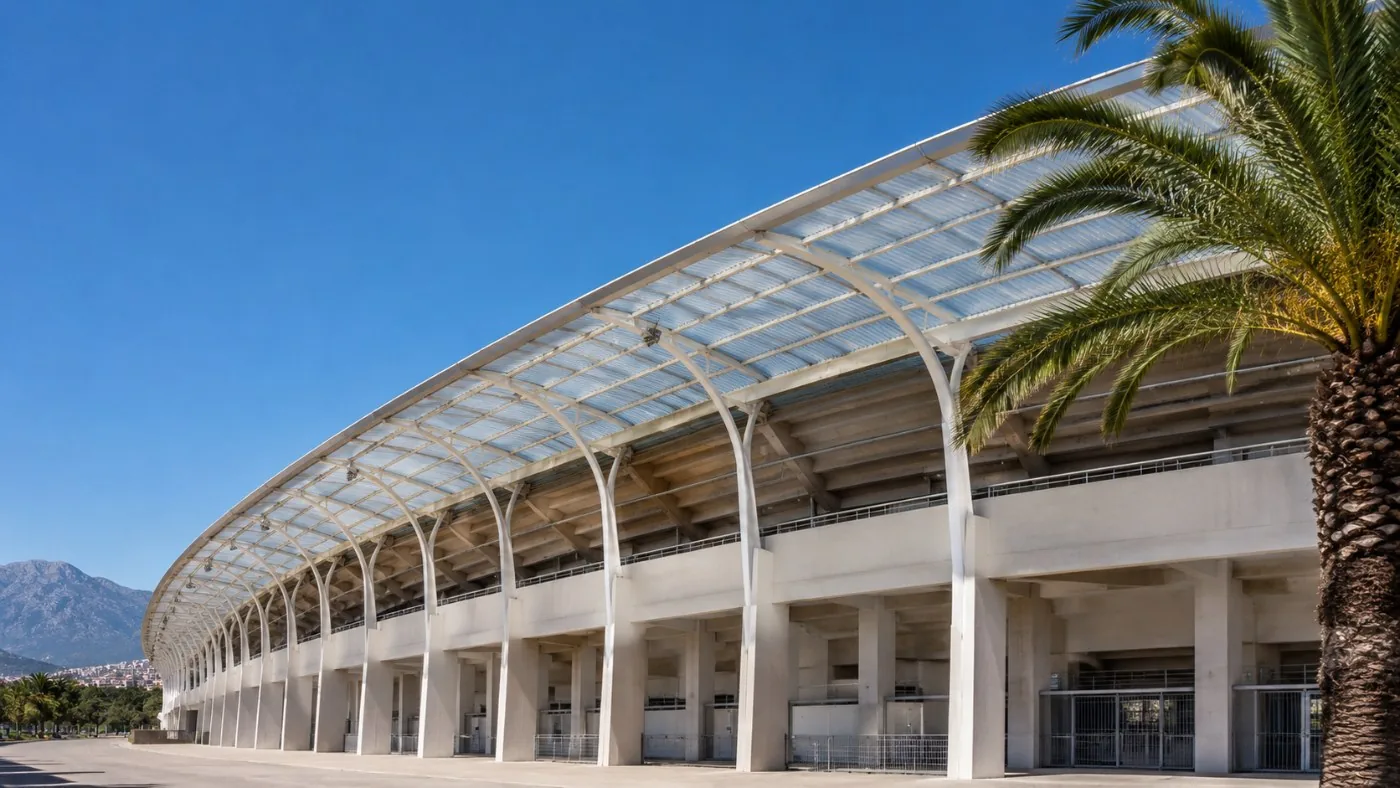
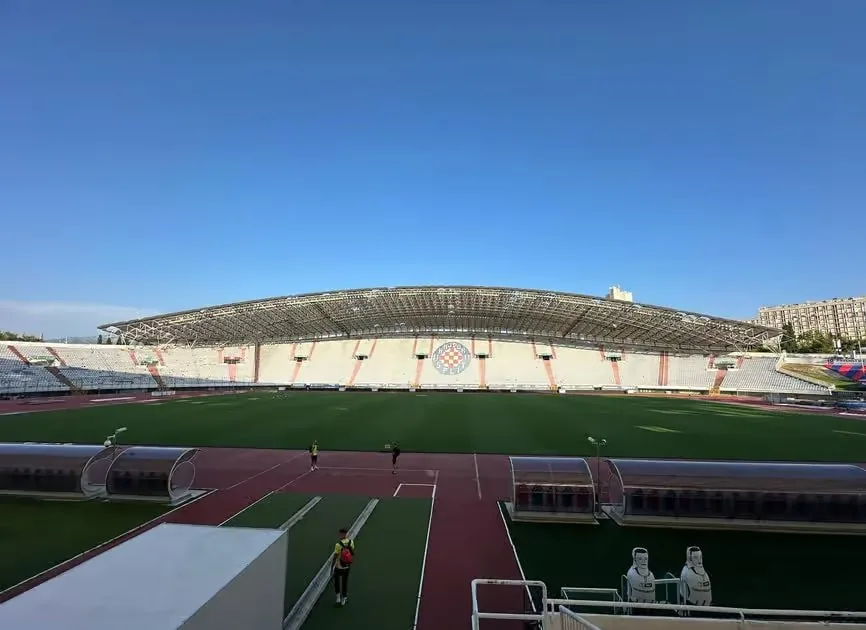
Inside Croatia's biggest working stadium: trophy room, press room and pitch side.
Check dates for the Poljud stadium tourWhat are the biggest stadiums in Croatia?
Poljud, Maksimir, Gradski vrt and Opus Arena in Osijek, then a group of grounds around 8,000 to 11,000 seats.
Capacities from each stadium's entry; sources vary by a few hundred seats.
| Stadium | City | Club | Seats |
|---|---|---|---|
| Poljud | Split | Hajduk Split | 33,987 (Hajduk) |
| Maksimir | Zagreb | Dinamo Zagreb | About 25,912 usable, 35,423 nominal (source) |
| Gradski vrt | Osijek | NK Osijek's old ground, used little since 2023 | 18,856 (source) |
| Opus Arena | Osijek | NK Osijek, opened 2023 | 13,005 (source) |
| Kantrida | Rijeka | Old Rijeka ground, Rijeka left in 2015 | About 10,600 (source) |
| Aldo Drosina | Pula | Istra 1961 | About 10,000 (source) |
| Varteks | Varaždin | NK Varaždin | 8,818 (source) |
| Rujevica | Rijeka | HNK Rijeka | 8,279 (source) |
Zagreb's Kranjčevićeva is being rebuilt to about 11,163 seats so Dinamo has somewhere to play while Maksimir comes down.
Is Croatia building a bigger stadium?
Yes, in Zagreb. The state and the city unveiled a new 35,000-seat Maksimir in February 2025, due in late 2028 or 2029. Split's plan for Poljud is still a proposal.
The Croatian government and the City of Zagreb split the 175 million euro cost. In Split, a March 2026 city study recommends tearing Poljud down and building a 35,000-seat stadium on the same site, but the Ministry of Culture has to rule on the protected building first. Rijeka plans a new Kantrida for 12,000 to 14,000.
The Split side of the story is in the new-stadium plan post.
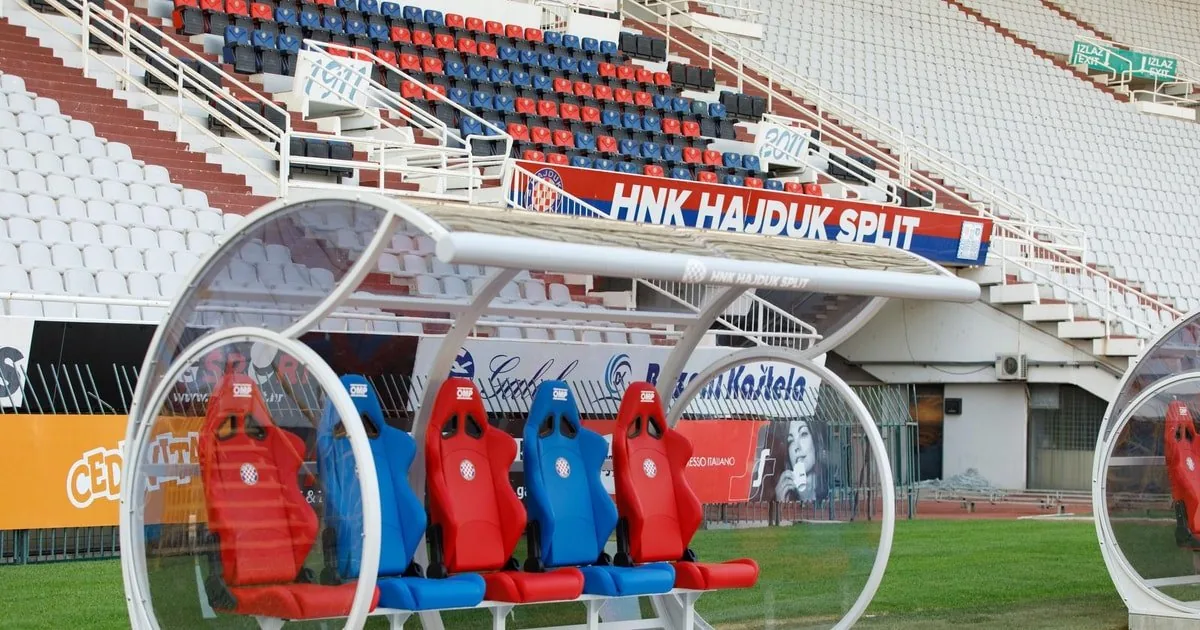
What is the biggest crowd ever at a Croatian stadium?
64,138 at Maksimir for NK Zagreb v Osijek in 1973. Poljud's record is about 62,000 for Hajduk v Dinamo in 1982.
Both came before all-seater stadiums. Poljud's 1982 figure is given as 62,000 by Wikipedia and 65,000 by StadiumDB; counts from that era vary widely. In the seated era, Poljud's best is 38,000 v Dinamo in 2009, and Hajduk set a league attendance record of 396,498 over the 2024-25 season. More in Poljud's capacity and history.
What is the biggest football club in Croatia?
It depends on the measure. Dinamo Zagreb has won by far the most titles; Hajduk Split has the most members and the biggest crowds.
Dinamo has 26 Croatian league titles by Wikipedia's count, against Hajduk's six (the last in 2004-05). Hajduk counters with support: hajduk.hr showed 114,046 members in October 2026, and the club drew the HNL's highest average attendance since independence in 2024-25. Hajduk also won 7 Yugoslav titles and 9 Yugoslav Cups, and 8 Croatian Cups since.
Call Hajduk the most-supported club and Dinamo the most successful, and nobody in either city can argue.


See the six Croatian titles and the Yugoslav cups up close, with the club's own guide.
Explore the Poljud stadium tour Tour detailsWhy is Dinamo Zagreb called GNK?
GNK stands for Građanski nogometni klub, "Citizens' football club". It echoes Građanski Zagreb, the club Dinamo replaced after the Second World War.
Građanski was founded in 1911, the same year as Hajduk, and was dissolved by the new authorities in 1945 (GNK Dinamo Zagreb). Hajduk is HNK: Hrvatski nogometni klub, Croatian football club. Their meetings are the Vječni derbi, the Eternal derby, first played in 1946.
What does "hajduk" mean?
A hajduk was a Balkan outlaw who fought Ottoman rule, a Robin Hood figure in local songs. Professor Josip Barač suggested the name in 1911.
The founders were Split students in Prague who had the idea at the U Fleků pub after a Sparta-Slavia match. They founded the club at home in Split on 13 February 1911 (HNK Hajduk Split), so "founded in Prague" is a myth. The white shirts and blue shorts, worn since 1914, are said to stand for white sails on a blue sea. The city celebrates the birthday every year: see the 13 February post.
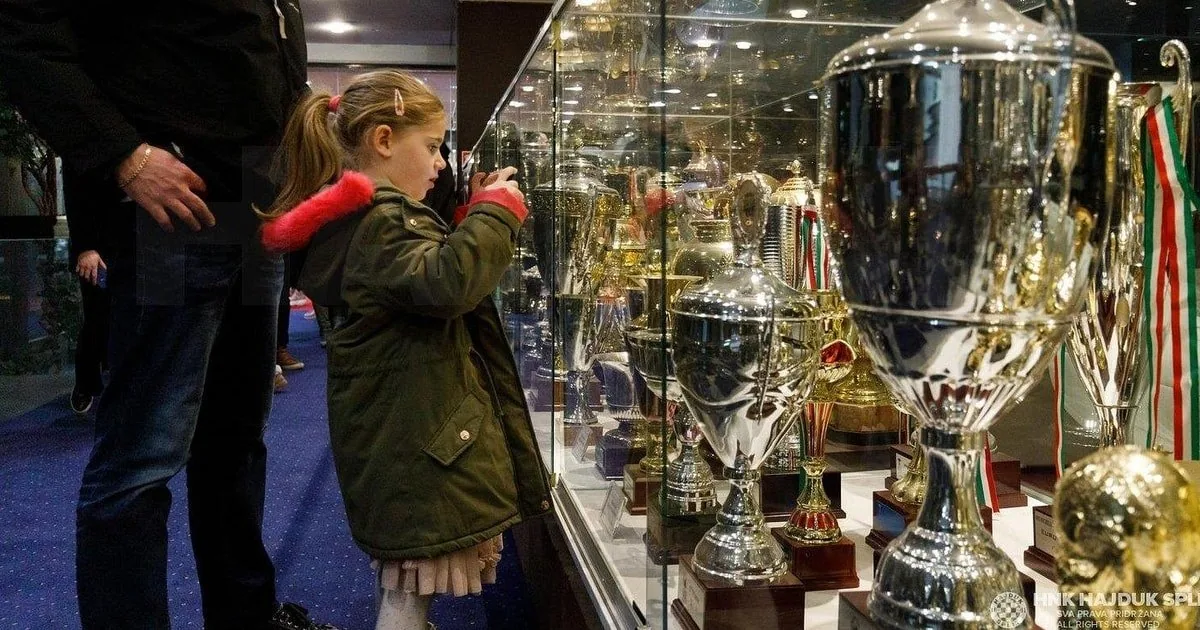
The founding story, from a Prague pub to Poljud, told on the club's own tour.
Check dates for the Poljud stadium tourFrequently asked questions
Is Poljud bigger than Maksimir?
In usable seats, yes: 33,987 against about 25,912. On paper Maksimir has 35,423, but its east stand has been closed since the 2020 earthquake.
Where does the Croatia national team play?
Around the country: at Maksimir, Poljud, Rujevica, Aldo Drosina and Varaždin among others.
What does HNK stand for?
Hrvatski nogometni klub, Croatian football club. Hajduk Split and Rijeka both use it.
Which is older, Hajduk or Dinamo?
Hajduk, founded in 1911. Dinamo was founded in 1945, after Građanski Zagreb was dissolved.
Ready to book
Choose your tour
Free cancellation up to 24 hours before on every option. Prices are from-prices in USD and move with the season.
Poljud Stadium Tour with Trophy Room
- Live guide in English, Italian or Croatian
- Trophy room with over 1,500 items
- Press room and VIP lounge, with photos
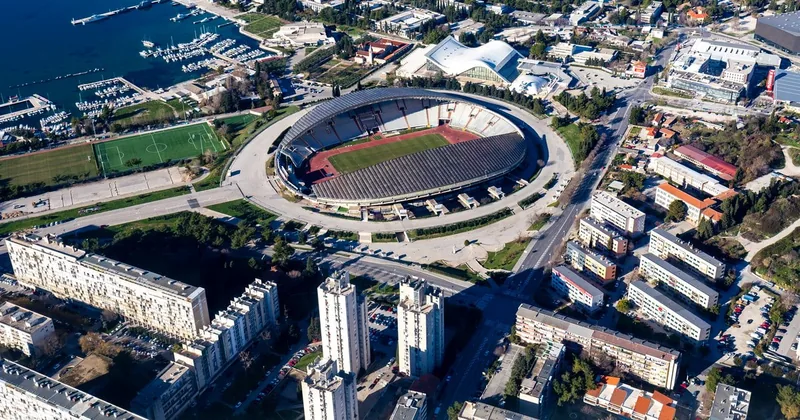
Old Town Bike Tour with Poljud Stadium
- Bike, helmet and a licensed guide
- Guided Poljud stadium tour, ticket included
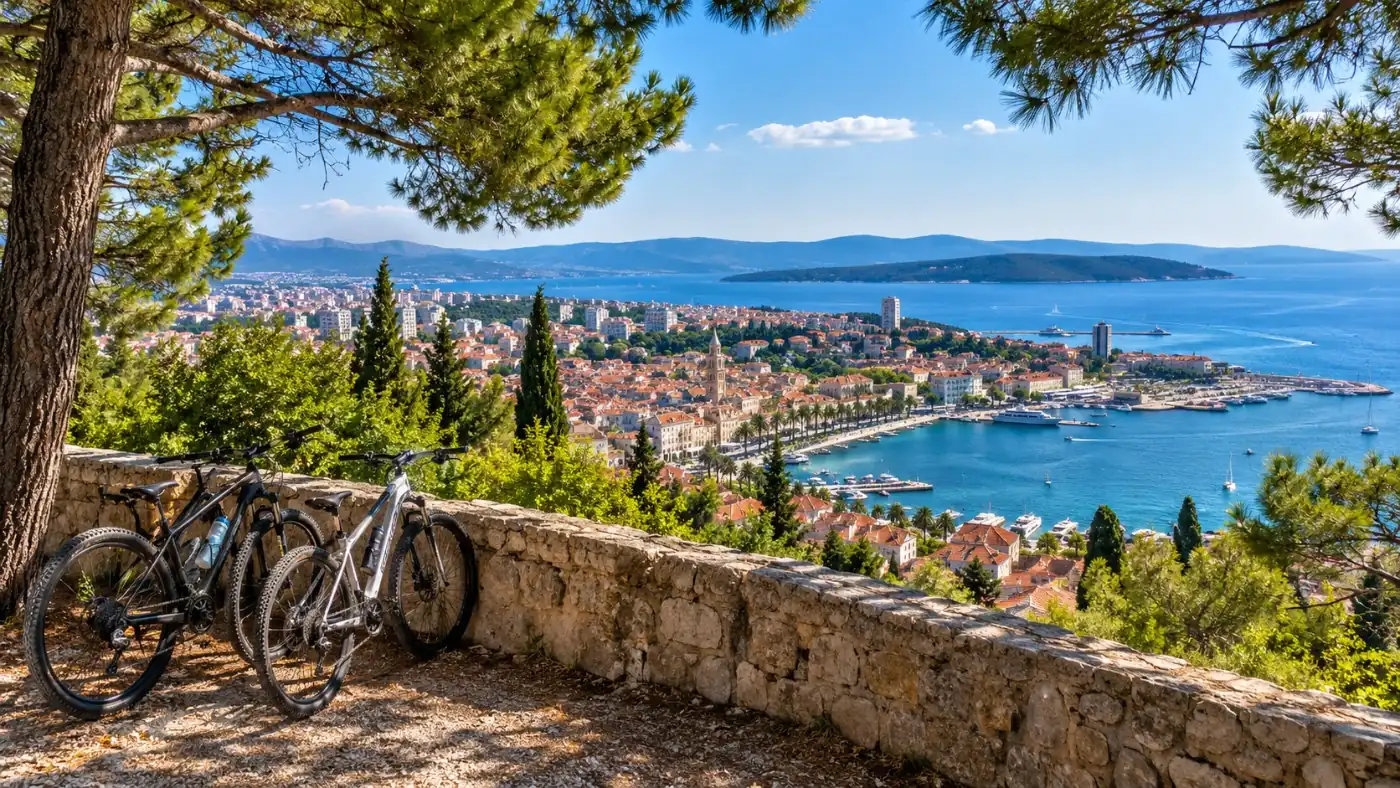
- Sustipan park and the Marjan forest