Booking choice: The Poljud stadium tour, from $13 per person. Check dates Tour details
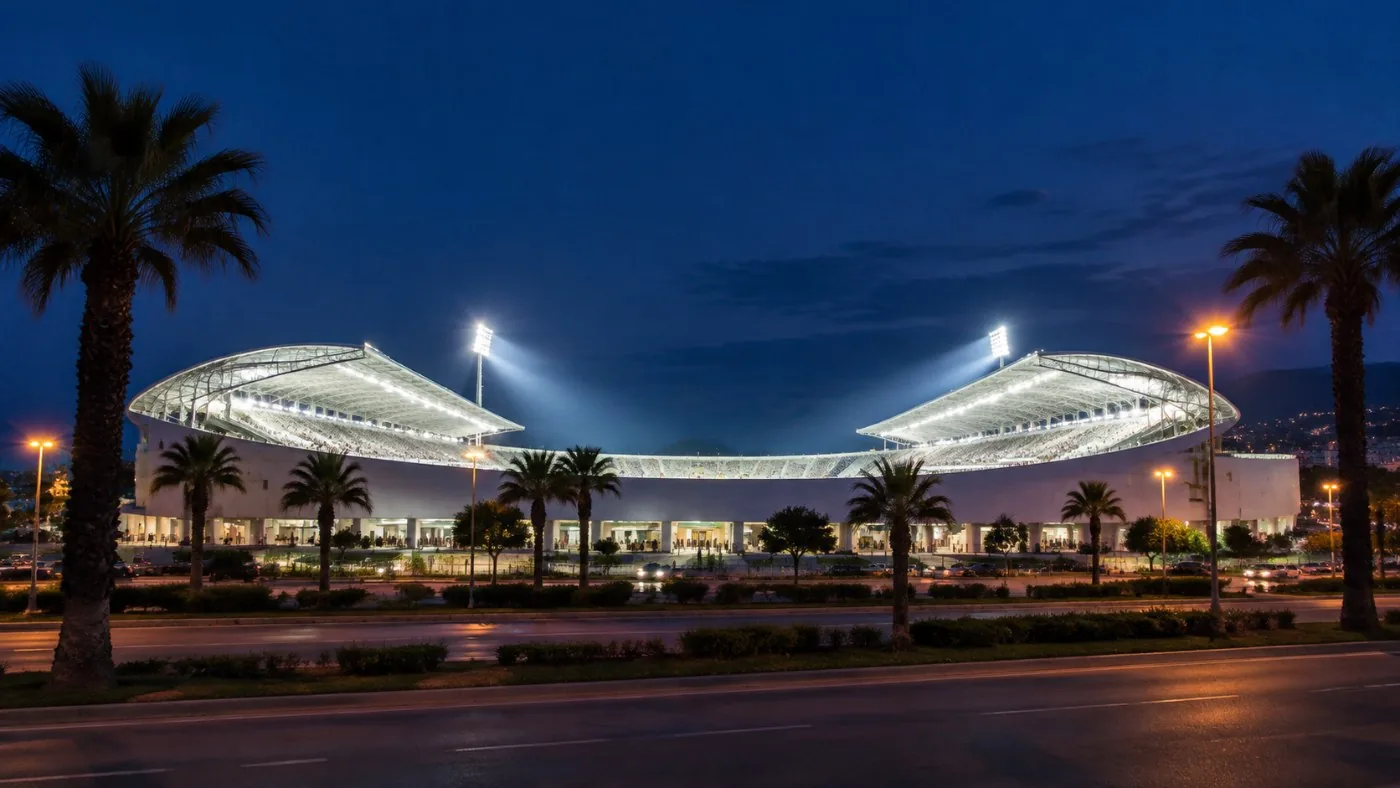
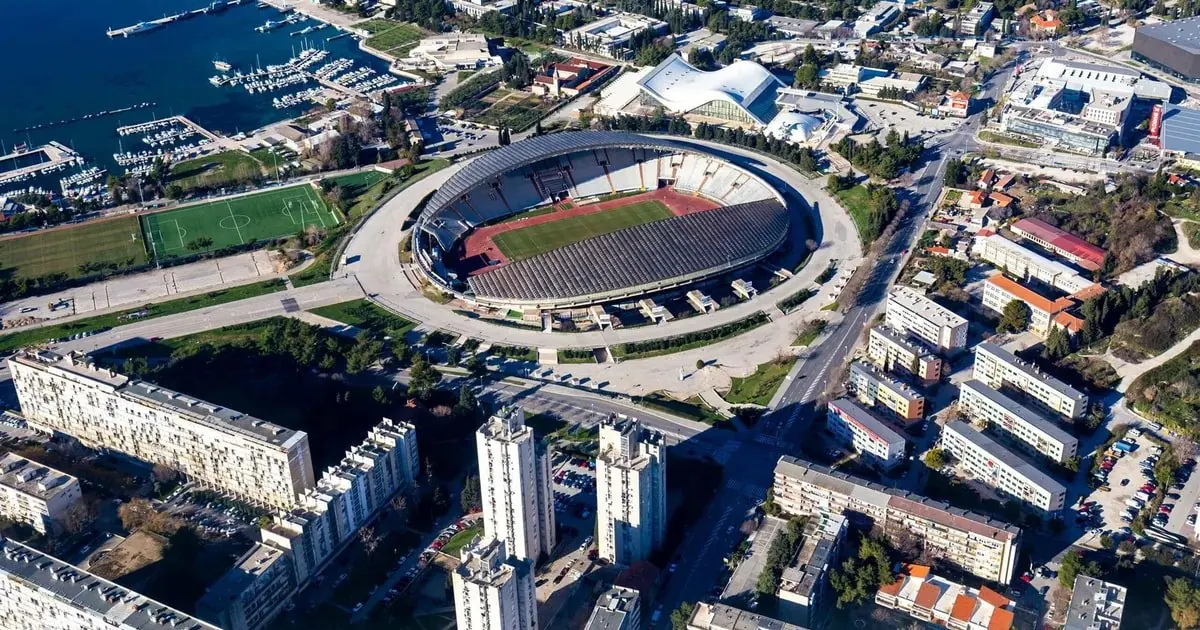
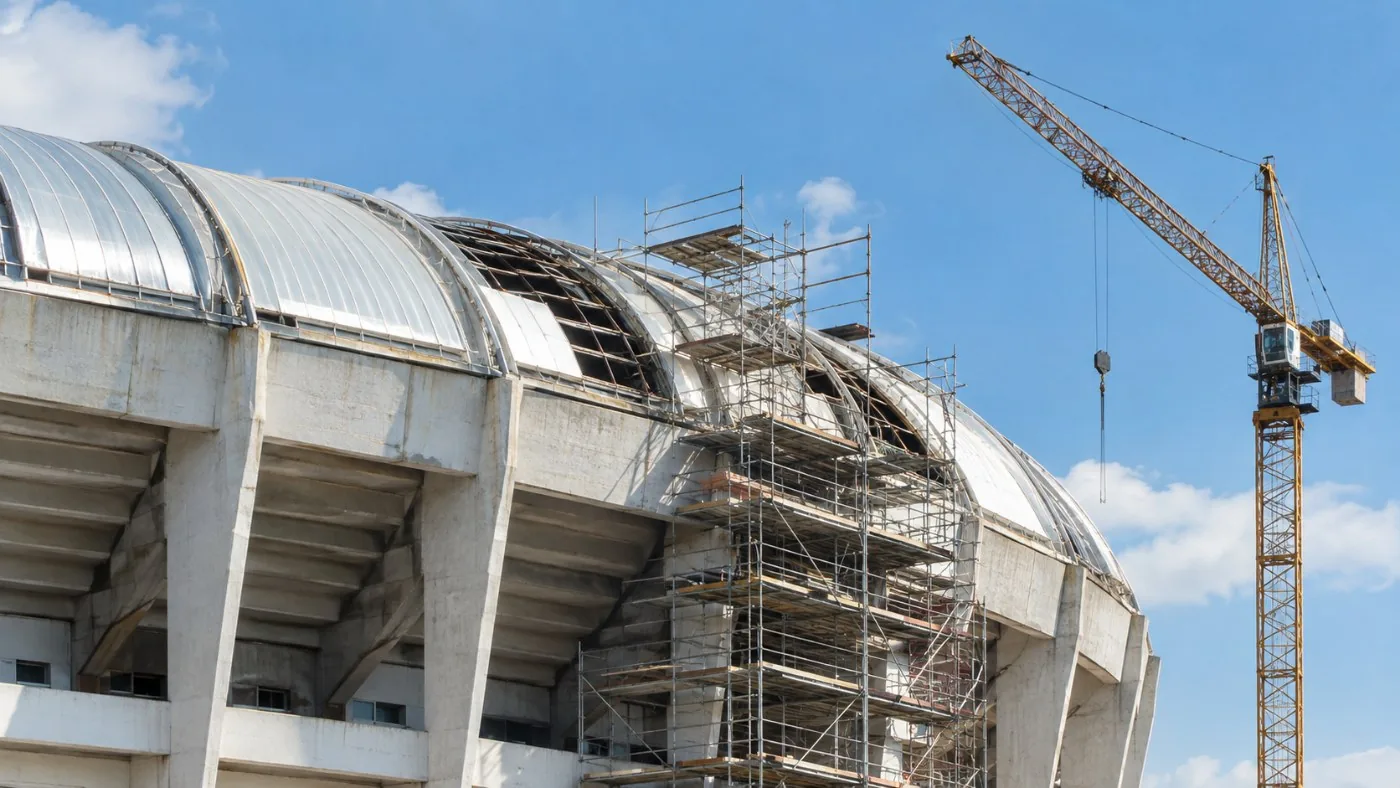
Poljud has been arguing with its own roof for years. A storm in July 2025 tore part of it away, engineers said in February 2026 that the structure could not be reconstructed in any useful way, and in March a study for the City of Split recommended knocking the stadium down and building a new one of about 35,000 seats on the same plot.
Seven months later nothing has been demolished, no referendum has been held and the official decision is still pending. This post lays out what is decided, what is not, and who holds the pen, as of 26 October 2026.
The quick answer
No. As of 26 October 2026 Poljud has not been condemned. A March 2026 city study recommends demolition and a new 35,000-seat stadium on the site, with Hajduk moving to Brodarica from early 2029 and back in early 2032. Poljud is a protected cultural good, so the Ministry of Culture and the conservators have the final word. A government expert commission finished its review in October, but its findings had not been published. The stadium is open, Hajduk plays there and the tour runs.
Is Poljud going to be demolished?
Not as things stand. Demolition is the option the city's study recommends, but no binding decision, demolition date or design has been announced.
On 12 October 2026 Tourism and Sport Minister Tonči Glavina said a government expert commission had finished its analysis of the structure and presented its conclusions to the ministers. He did not say what they were. The public would hear "very soon", he told Index.hr.
Twelve days later Split's mayor Tomislav Šuta was asked again. "The official decision on Poljud will certainly be published soon," he said, with no date, according to Dalmacija Danas. The honest summary: demolition is on the table and has strong backers, and nobody with the authority to order it has done so.
| Question | Status on 26 Oct 2026 |
|---|---|
| Demolition decided? | No |
| Expert commission finished? | Yes, findings not published |
| Heritage protection lifted? | No, Poljud is still a protected cultural good |
| Referendum held? | No, postponed in March 2026 |
| Design or building permit? | None announced |
| Stadium open? | Yes: league, European and national-team games, plus the tour |
What happened to the Poljud roof?
A storm on 8 July 2025 ripped off roof panels and flooded the pitch. Earlier reports from 2018 and 2023 had already flagged corrosion in the steel roof.
Climbers had to secure the damaged roof with tarpaulin, and Dinamo, of all clubs, offered to help, as Croatia Week reported. The government set aside €2 million for repairs and promised a commission. By March 2026 Hajduk said only about €300,000 of that had reached it.
The bigger blow came in February 2026, when structural experts at Split's civil-engineering faculty concluded that Poljud "cannot be effectively reconstructed". StadiumDB covered the finding: fatigue in the steel roof elements, and fragments that have fallen in recent years without serious injuries.
The problem is visible on match day too. During the rainy Hajduk v Dinamo derby on 10 October 2026, water came through the roof and ran down the concrete into the corridors, Sportnet noted.
What did the March 2026 study recommend?
Knock Poljud down and build a new stadium of about 35,000 seats on the same site, with Hajduk playing at a rebuilt Brodarica from early 2029 to early 2032.
The feasibility study by UHY Savjetovanje, presented on 12 March 2026 and summarised by tportal, costed several futures. Keeping and repairing the existing stadium came to more than €120 million over the years. The recommended package, a new Poljud plus a rebuilt Brodarica of just under 11,000 seats as a temporary home, came to about €316 million.
Money would come from a company owned by the state and the city, which would borrow part of it, with the rest from public budgets and the sale of building rights for a hotel, a congress centre and shops on the site. Some reports quote about €205 million for the stadium alone. Treat every figure here as a study estimate, not a budget.
| Option in the study | Estimated cost | Verdict |
|---|---|---|
| Keep repairing today's Poljud | Over €120m | Feasible only in part |
| New Poljud on the same site, Brodarica as temporary home | About €316m | Recommended |
| Big stadium at Brodarica, Poljud for athletics | About €391.5m | Rejected |
| New stadium on the city outskirts | About €578m | Rejected |
Who wants a new stadium, and who wants to save Poljud?
Hajduk, Torcida and the mayor want a new stadium. Croatian architects, conservation voices and Magaš's copyright holder want the 1979 building restored.
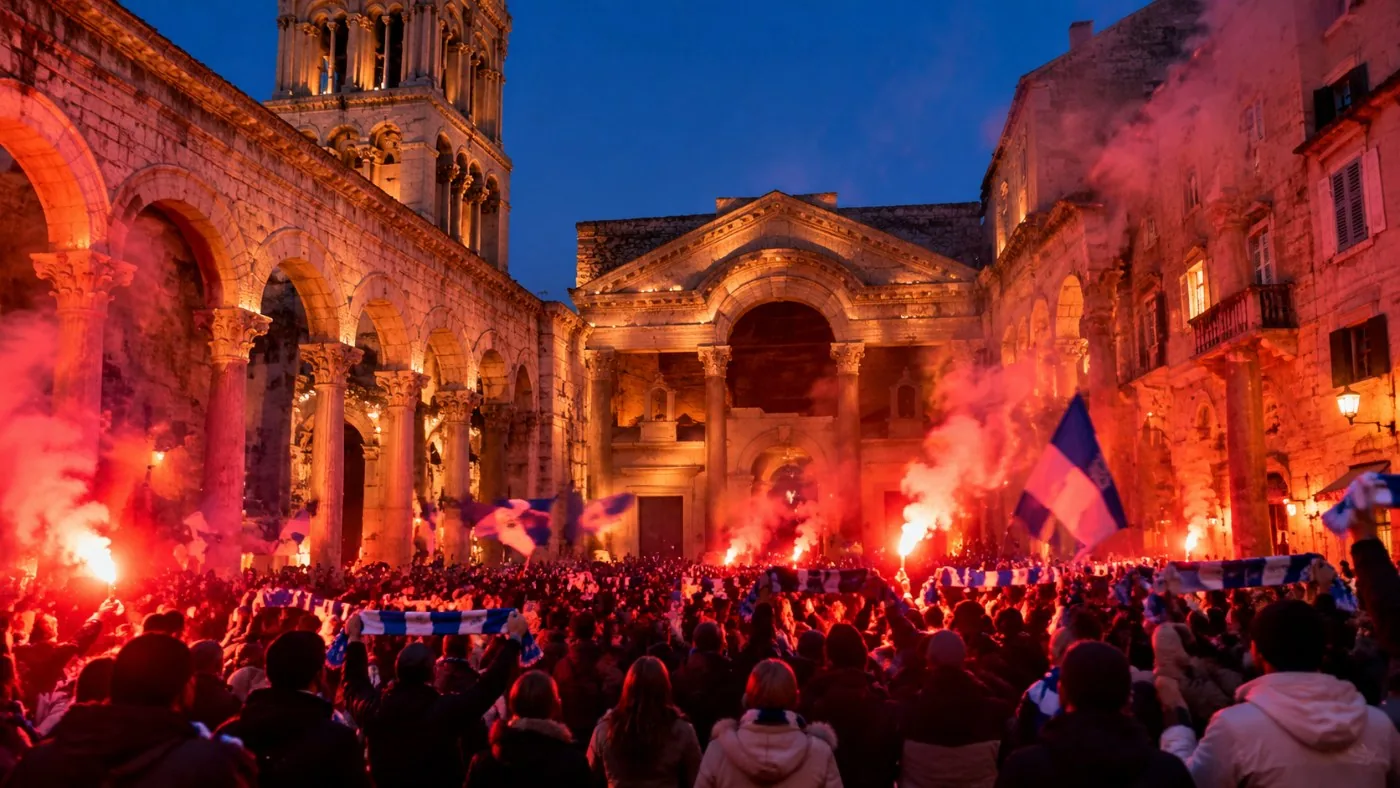
Torcida came out first, on 15 March: "Hajduk treba i zaslužuje NOVI stadion" (Hajduk needs and deserves a NEW stadium), as tportal reported. Five days later the club called a new modern stadium "the only acceptable long-term solution". Both sides are still there in October.
The other camp is just as loud. On 19 March Croatian architects warned that Poljud must not be a victim of politics and populism. In April architect Nenad Fabijanić, who holds the copyright on Magaš's design, presented a plan to restore the stadium to roughly its 1980s state and win over 8,000 m² of space under the stands. The former head conservator in Split, Radoslav Bužančić, told tportal that people argue about Poljud as if UNESCO protected it. It doesn't. It is a national monument.
The politics shifted again on 30 September, when Prime Minister Andrej Plenković said in Split that the existing stadium should be reconstructed into a modern football ground. Šuta replied that he had seen no expert evidence that reconstruction is possible, per tportal. Mid-October reports floated a compromise: a deep rebuild that replaces most of the structure but keeps Poljud's look. Nothing official backs it yet.
Who decides the future of Poljud?
The state, not the city. Poljud has been a protected cultural good since 2015, so the Ministry of Culture and its conservators must agree before anything is torn down.
Culture Minister Nina Obuljen Koržinek put it plainly in March: for a protected monument, restoring and preserving it is the first option, and the engineers should do their analysis before anyone decides, HRT reported. On 17 March Šuta postponed the advisory referendum he had promised until the ministry rules. Marijana Puljak of the Centar party argued the city has no power to strip the protection anyway.
Money is the other lock. The government and the city have agreed in principle to split future football-infrastructure costs 50/50, but the amounts and deadlines are not set. Šuta has said Split cannot fund a stadium without direct state help. The one thing we would bet on: no bulldozer moves until all three, the conservators, the government and the city, sign the same paper.
| When | What happened |
|---|---|
| Nov 2015 | Poljud listed as a protected cultural good (register no. Z-6644) |
| 8 Jul 2025 | Storm damages the roof; €2m in state aid announced |
| Feb 2026 | Engineering faculty: no effective reconstruction possible |
| 12 Mar 2026 | UHY study recommends demolition and a new 35,000-seat stadium |
| 17 Mar 2026 | Referendum postponed until the Ministry of Culture rules |
| Apr 2026 | Fabijanić restoration plan; expert conference in Split |
| 30 Sep 2026 | PM Plenković speaks for reconstruction |
| 12 Oct 2026 | Expert commission's findings presented to ministers, not published |
| 24 Oct 2026 | Mayor: decision "soon", no date |
What does the Poljud plan mean if you are visiting Split?
Nothing changes for now. Hajduk plays at Poljud, the club's tour runs, and even the fastest plan keeps the team there until early 2029.
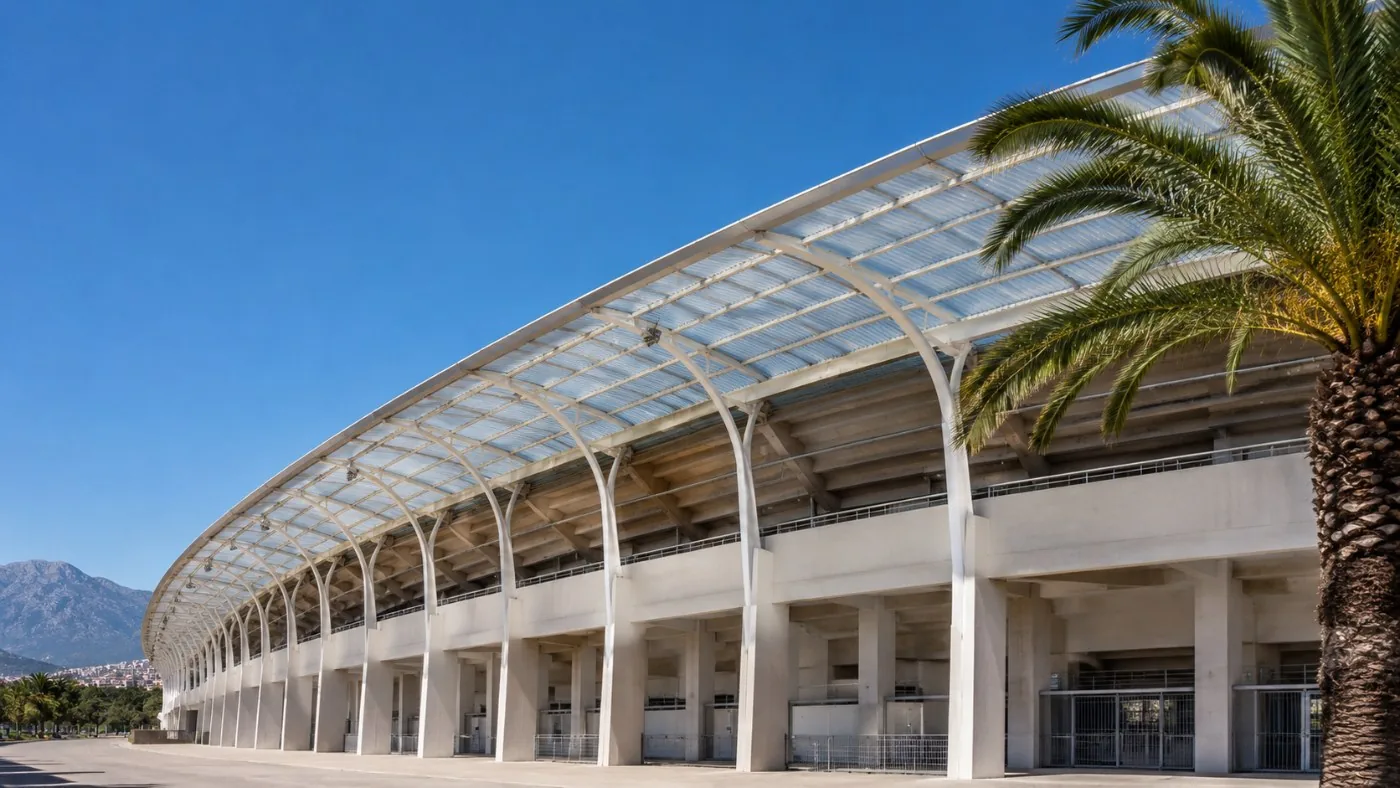
Whatever the commission says, the 1979 shell has at least two more seasons in it. If the new-stadium plan wins, the version of Poljud you can walk around today, with its translucent roof panels and open south end, disappears. If restoration wins, a long building site is likely. Either way the current stadium has an end date it didn't have five years ago.
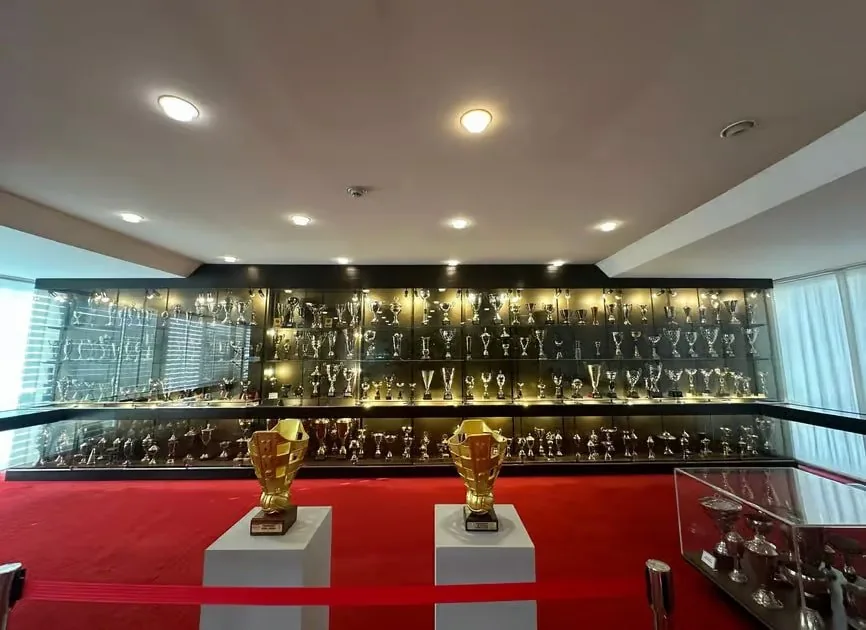
Our advice is boring and practical: see it this season. Hajduk's own stadium tour takes you into the trophy room, the press room and down to the pitch side in 30 to 45 minutes. The tour covers the story of the stadium and its architect. For how the stadium came to be built, read our Poljud history guide.

The club's own tour: trophy room, press room, VIP lounge and the pitch side, while the 1979 stadium still stands.
Explore the Poljud stadium tour Tour detailsFrequently asked questions
Is Poljud Stadium being demolished?
Not yet. A March 2026 city study recommends demolition and a new stadium on the site, but as of 26 October 2026 no demolition decision, date or design has been announced.
Is Poljud a UNESCO World Heritage Site?
No. Poljud is a protected cultural good on Croatia's national register since November 2015. UNESCO status in Split belongs to Diocletian's Palace and the Old Town.
Where would Hajduk play while a new Poljud is built?
The study proposes a rebuilt Brodarica stadium of just under 11,000 seats, with Hajduk moving there in early 2029 and returning to a new Poljud in early 2032.
Can I still visit Poljud Stadium?
Yes. Hajduk plays its home games there and the club runs a guided stadium tour with the trophy room, press room and pitch side.
Ready to book
Choose your tour
Free cancellation up to 24 hours before on every option. Prices are from-prices in USD and move with the season.
Poljud Stadium Tour with Trophy Room
- Live guide in English, Italian or Croatian
- Trophy room with over 1,500 items
- Press room and VIP lounge, with photos
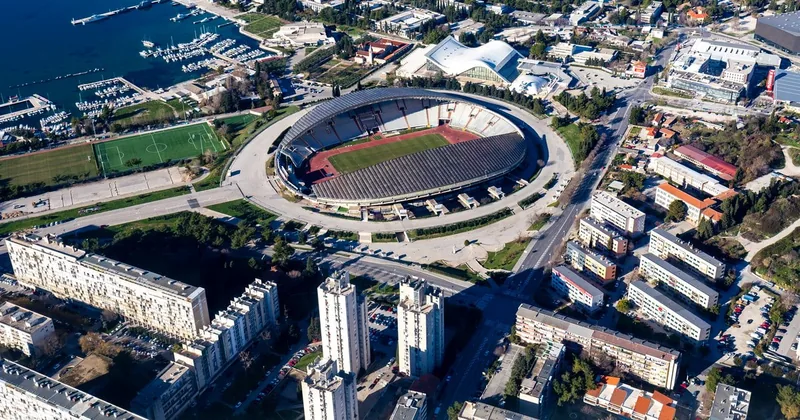
Old Town Bike Tour with Poljud Stadium
- Bike, helmet and a licensed guide
- Guided Poljud stadium tour, ticket included
- Sustipan park and the Marjan forest
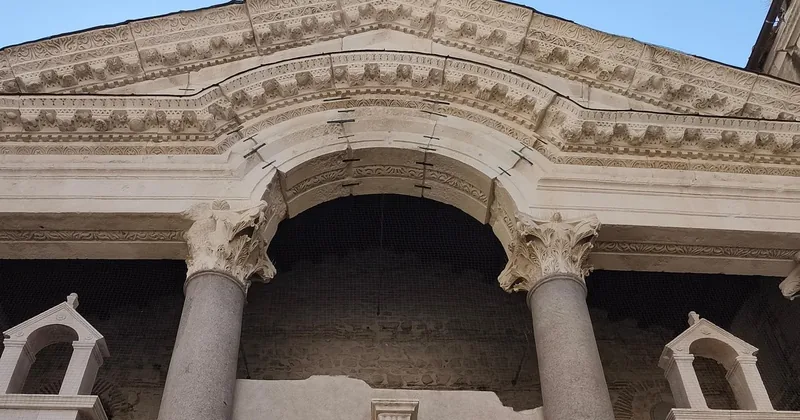
Diocletian's Palace & 20th-Century History Walk
Tito, the wars and Hajduk as a city symbol